This site is powered by the ProTrainings platform. All content is © 2025, ProTrainings Europe Ltd. All rights reserved.


Pro Trainings is rated 4.6 out of 5 based on 70450 ratings.
This site is powered by the ProTrainings platform. All content is © 2025, ProTrainings Europe Ltd. All rights reserved.
Pro Trainings is rated 4.6 out of 5 based on 70450 ratings.

ProTrainings is proud to announce the launch of our new Allergy Awareness and Anaphylaxis Level 3 course, created in response to Benedict’s Law and the growing need for stronger allergy safety training across the UK.
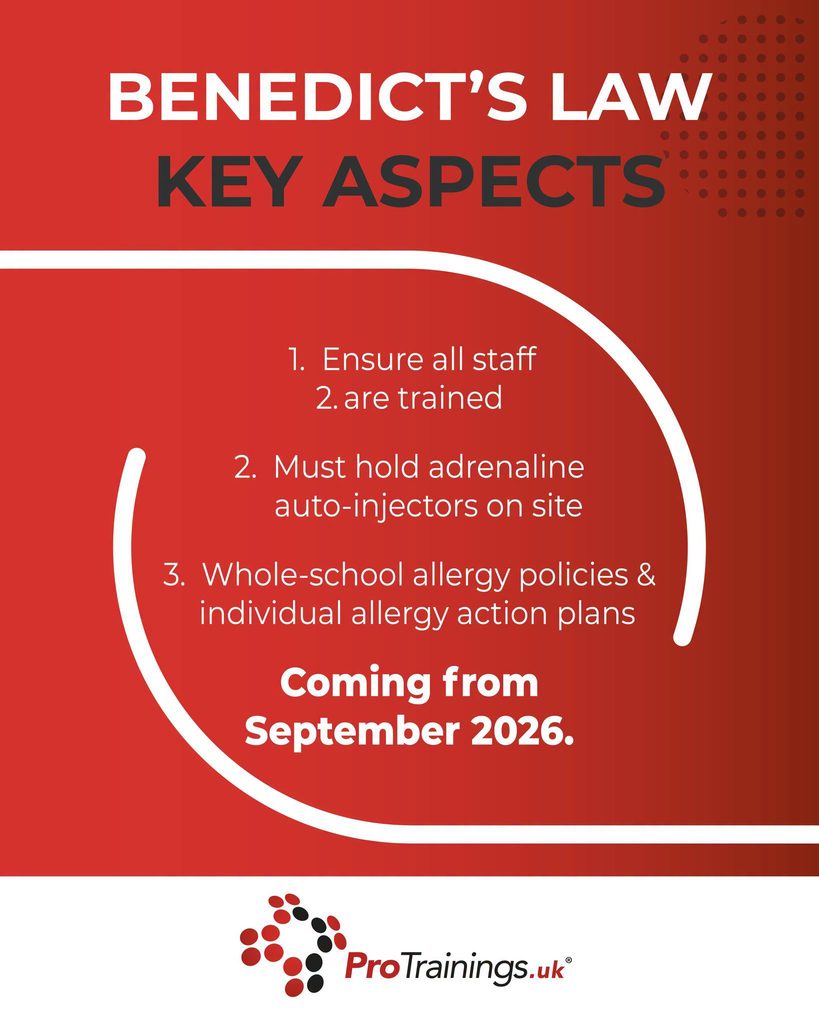
Severe allergies and anaphylaxis cases continue to rise, which means organisations now carry greater responsibility to ensure staff can recognise risks, prevent allergen exposure, and respond quickly and effectively in an emergency. Benedict’s Law has further highlighted this responsibility, particularly in schools and in settings that care for children and vulnerable individuals.
Benedict’s Law follows the tragic death of Benedict Blythe, who lost his life after suffering an allergic reaction at school. The campaign behind the law has brought national attention to the urgent need for stronger allergy management, better staff awareness, and clearer emergency procedures.
The aim of Benedict’s Law is to raise allergy safety standards by improving training, communication, and preparedness in environments where allergic reactions may occur. As awareness increases, many organisations are now reviewing their policies and training to better protect those at risk.
We designed the Allergy Awareness and Anaphylaxis Level 3 course to go beyond basic awareness training. It gives learners the deeper understanding they need to confidently manage allergy risks and respond to emergencies.
The course covers:
We developed this course using current guidance and best practice recommendations, making it suitable for organisations across many sectors, including:
As expectations around allergy safety continue to evolve, organisations increasingly rely on high-quality training to strengthen safety standards and stay aligned with emerging guidance.