This site is powered by the ProTrainings platform. All content is © 2025, ProTrainings Europe Ltd. All rights reserved.


Pro Trainings is rated 4.6 out of 5 based on 70450 ratings.
This site is powered by the ProTrainings platform. All content is © 2025, ProTrainings Europe Ltd. All rights reserved.
Pro Trainings is rated 4.6 out of 5 based on 70450 ratings.

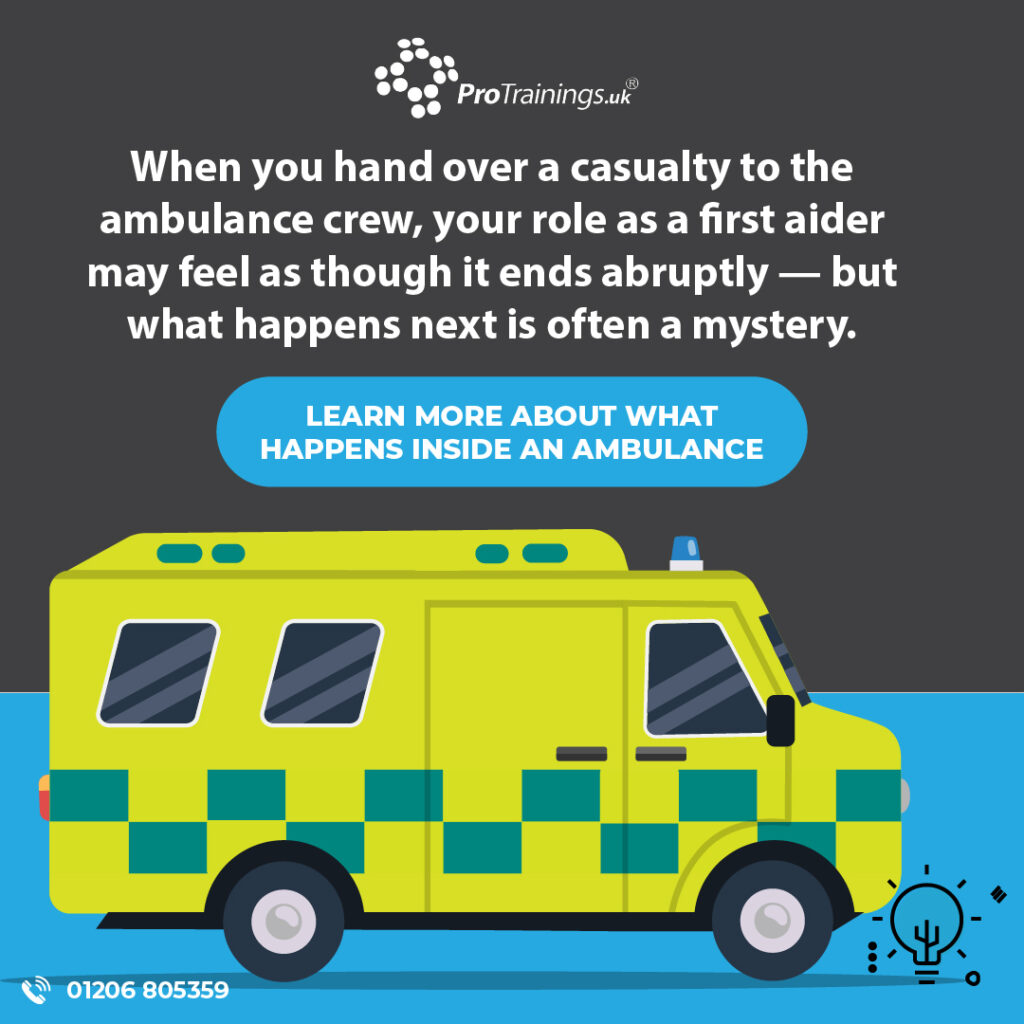
Understanding the stages of pre-hospital care used by the East of England Ambulance Service (EEAST), which covers Suffolk and Essex, can give you a clearer picture of what your actions lead into.
This guide breaks down the typical stages of ambulance care so you know exactly what to expect once the professionals take over.
In the Suffolk and Essex area, ambulance crews follow nationally recognised handover structures such as ATMIST or SBAR. A clear, concise handover helps the paramedics immediately understand the situation.
A strong handover includes:
This information directly influences the crew’s priorities and the speed at which they act.
Once the casualty is on board the ambulance, the crew will carry out a Primary Survey, following the national ABCDE approach:
Paramedics in Suffolk and Essex follow these same NHS England clinical guidelines, ensuring consistency across the region.
Next, the casualty will be connected to essential monitoring equipment. On an EEAST ambulance, this usually includes:
These observations give the crew a clearer clinical picture and help identify any time-critical issues early.
Treatment depends on the casualty’s condition but may include:
Your initial first aid — especially airway management, CPR, bleeding control, and reassurance — sets a strong foundation for these next steps.
Once stabilised, the crew will carry out a more detailed, structured assessment. This may include:
In Suffolk and Essex, these assessments help determine whether the casualty needs the local A&E or a specialist centre, such as:
During transport, the casualty is continually monitored. The paramedic or EMT will:
Ambulances in the Suffolk/Essex area are equipped to manage most emergencies en-route, ensuring the casualty arrives in the best possible condition.
On arrival, the crew will give the hospital a professional, structured handover — again using ATMIST or SBAR. This includes:
Your early actions as a first aider form part of this clinical timeline, giving hospital staff essential context.
Good first aid can:
Your first few minutes of action often shape the entire emergency pathway.
If you’d like to build your confidence and understand the full chain of survival, explore our accredited first aid and medical training courses:
👉 www.protrainings.uk/courses
You can also equip yourself or your workplace with reliable first aid supplies from our online store:👉 www.protrainings.uk/store