This site is powered by the ProTrainings platform. All content is © 2025, ProTrainings Europe Ltd. All rights reserved.


Pro Trainings is rated 4.6 out of 5 based on 70450 ratings.
This site is powered by the ProTrainings platform. All content is © 2025, ProTrainings Europe Ltd. All rights reserved.
Pro Trainings is rated 4.6 out of 5 based on 70450 ratings.

When we think about first aid, most of us picture bandages, CPR, or calling 999. But there’s another side to responding in an emergency that is often overlooked: the emotional impact on the person who gave the help. Delivering first aid can be a deeply stressful experience, especially if the situation was serious or life-threatening.
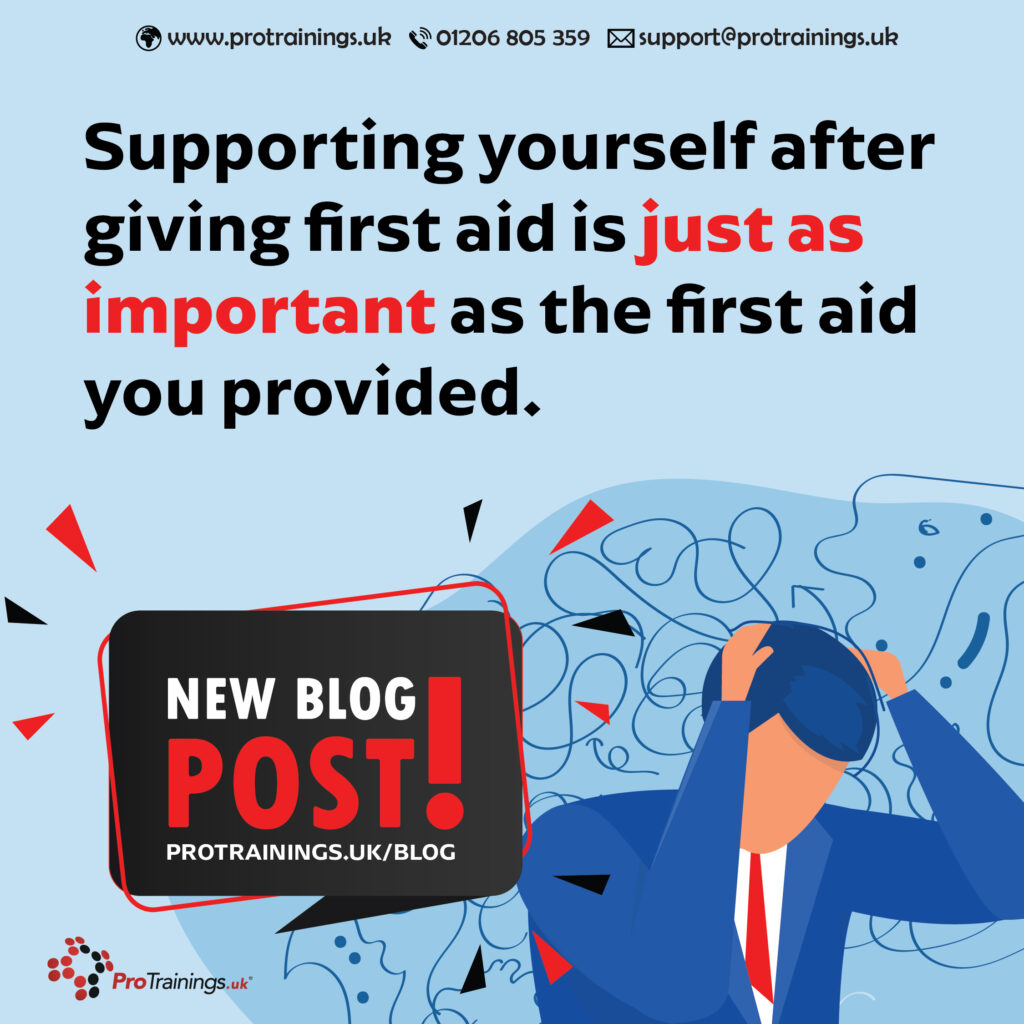
Even when you act quickly and do everything right, it’s normal to feel shaken afterwards. You may replay the event in your mind, wonder if you could have done more, or feel responsible for the outcome. These thoughts are natural but can sometimes lead to stress or feelings of guilt.
Some people may notice:
These are common responses to witnessing or being involved in an emergency, and they don’t mean you are weak or did something wrong. They simply reflect that the experience was intense and outside of everyday life.
One of the most effective ways to process what happened is to talk about it. Sharing your experience with a trusted colleague, friend, or family member can help put events into perspective. In workplace settings, many employers have peer support networks or access to employee assistance programmes (EAPs) that provide confidential counselling.
If you responded as part of a team, don’t underestimate the value of speaking with others who were there. They will understand the situation in a way others may not, and it can be reassuring to know you are not alone in how you feel.
If distress continues beyond a few days, or if the impact is interfering with daily life, professional help is recommended. Your GP can refer you to talking therapies, and charities such as Mind, Samaritans, or PTSD UK offer resources and support lines. For those in emergency or healthcare roles, organisations like The Blue Light Programme (from Mind) focus specifically on the needs of responders.
There are also simple steps you can take to support your recovery after a difficult incident:
In moments of crisis, you stepped forward when it mattered. That is something to be proud of. The outcome of a medical emergency does not always lie in your hands, but your actions gave someone a better chance and offered reassurance in their most vulnerable moment.
Supporting yourself after giving first aid is just as important as the first aid you provided. By recognising the emotional impact and reaching out for help when needed, you ensure that you can continue to be there for others — and for yourself.