This site is powered by the ProTrainings platform. All content is © 2025, ProTrainings Europe Ltd. All rights reserved.


Pro Trainings is rated 4.6 out of 5 based on 70450 ratings.
This site is powered by the ProTrainings platform. All content is © 2025, ProTrainings Europe Ltd. All rights reserved.
Pro Trainings is rated 4.6 out of 5 based on 70450 ratings.

Not sure whether to choose online or classroom first aid training? Here’s a quick breakdown to help you decide:
Quick Comparison
| Aspect | Online Training | Classroom Training |
|---|---|---|
| Learning Style | Self-paced, virtual simulations | Hands-on, instructor-led |
| Schedule | Flexible, anytime access | Fixed dates and times |
| Cost | Starts at $19.95 | $40–$60 |
| Practice | Virtual simulations | Real equipment and teamwork |
| Certification | Check employer acceptance | Widely recognized |
Key Tip: Choose online if you need flexibility and lower costs. Opt for classroom if hands-on experience is crucial.
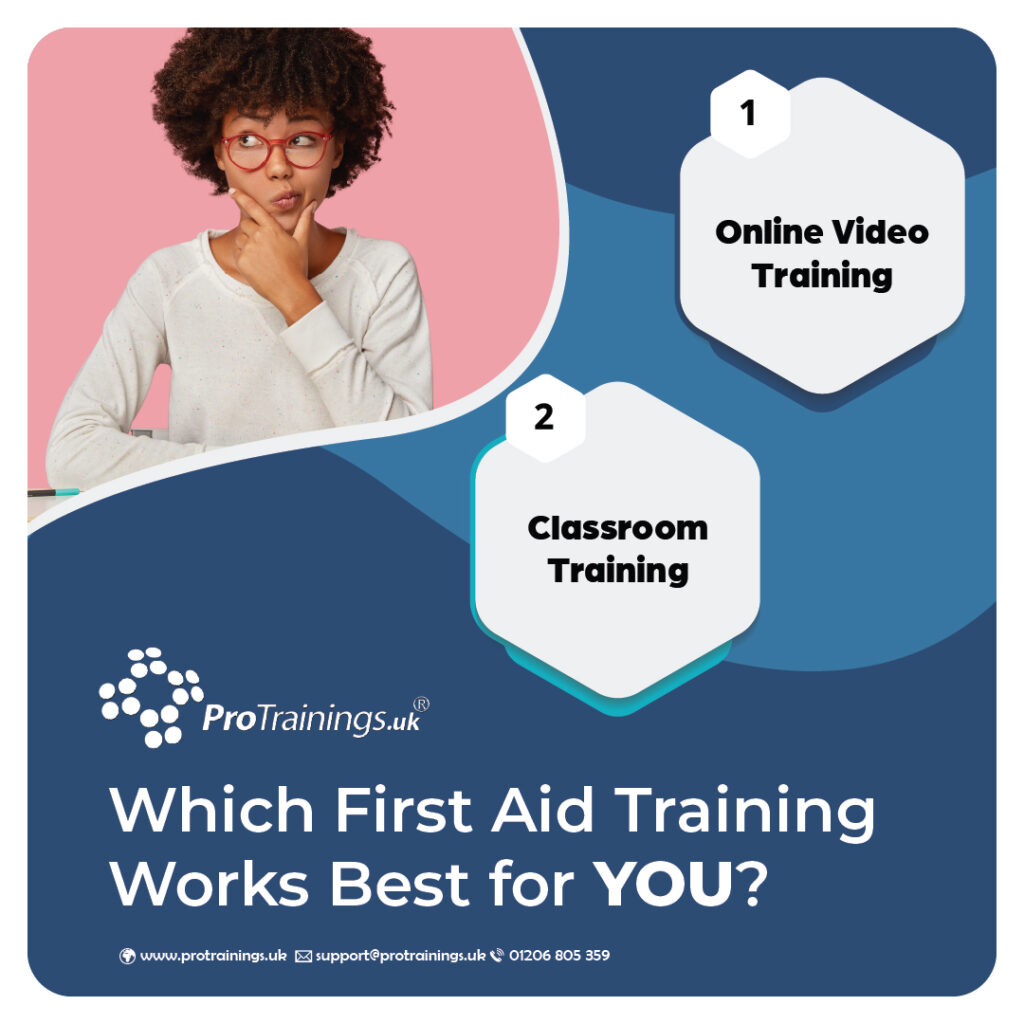
Online training takes place virtually, allowing students to progress at their own pace through digital modules. This format is particularly helpful for revisiting difficult topics.
Classroom training happens in a physical space with an instructor present. Instructors can demonstrate techniques in real-time and adjust their teaching based on how students respond.
| Aspect | Online Training | Classroom Training |
|---|---|---|
| Environment | Virtual, self-paced | Physical, instructor-led |
| Materials | Digital resources, videos | Physical equipment, mannequins |
| Interaction | Digital simulations | Face-to-face instruction |
| Assessment | Online quizzes | In-person skill evaluation |
Online first aid training offers flexibility, letting students access materials any time, day or night. This is ideal for people with unpredictable schedules or those juggling multiple commitments. You can spread the training over a few days or complete it in one intensive session.
Classroom training operates on a fixed schedule with specific meeting times. While this structure ensures steady progress, it requires committing to set time slots and may span a full day or multiple sessions.
The way skills are taught and assessed differs significantly between the two formats. Classroom training provides hands-on practice, with students receiving direct feedback while practicing techniques on mannequins.
Classroom CPR training includes in-person assessments and immediate feedback using mannequins [1].
Online training, on the other hand, uses digital simulations and video demonstrations to explain concepts. Assessments are typically done through online quizzes, which focus more on theoretical understanding rather than hands-on skills.
Online courses tend to be more budget-friendly due to lower overhead costs.
Classroom training, however, comes with added expenses for facilities, equipment, and instructor time. While this often results in higher fees, it also includes hands-on practice with professional tools and direct guidance from certified instructors, ensuring proper technique development. These cost differences highlight the unique advantages of each format, helping you decide which suits your learning needs and goals best.
Online first aid training has become a go-to option for many, offering convenience and affordability. With a variety of courses available, it provides a flexible way to gain essential skills. Here’s why it stands out:
One of the biggest perks of online training is that you can complete it whenever it suits you. For example, CPR Select’s certification programs can be wrapped up in about an hour [4]. No need to worry about class schedules or locations – just log in with an internet connection.
Online platforms let you control the pace of your learning. Need to revisit a topic? Pause, rewind, and review as much as you want. This approach is especially helpful for tackling tougher concepts and ensures you fully understand the material.
Online first aid courses are a budget-friendly alternative to traditional classroom settings. For instance, basic CPR certification starts at just $19.95 [1]. Plus, you save on other expenses like:
| Cost Category | Savings with Online Training |
|---|---|
| Travel Expenses | No need to commute |
| Materials | Digital resources included |
| Time Off Work | Train during your free time |
| Recertification | Lower renewal fees |
Online platforms are frequently updated to reflect the latest guidelines and practices [3]. They often include videos, interactive tools, and instant assessments to help you track your progress. Research even shows that online learning can be as effective as traditional classroom methods [2].
For workplace certifications, many employers now accept online credentials. However, it’s a good idea to confirm this beforehand, especially if local regulations require additional in-person assessments.
If you’re looking to gain practical skills and engage in interactive learning, classroom first aid training has a lot to offer. While online courses are convenient and budget-friendly, classroom training emphasizes hands-on experience and teamwork.
In a classroom setting, you get to practice with real first aid equipment. This hands-on approach helps build muscle memory and boosts your confidence in handling emergencies. For example, one student successfully used the Heimlich maneuver they learned in class to save a choking peer, earning local recognition [5].
“It’s the first time I heard one of our students react to a situation and use what we’ve taught them in a real-life situation, which is remarkable.”
- Anthony Fallon, Millis High School physical education teacher [5]
After practicing, you’ll receive direct feedback from instructors who refine your technique as you go. These experienced professionals tailor their teaching to meet your needs and provide immediate support:
| Benefit | What It Means |
|---|---|
| Real-time Correction | Fixes mistakes on the spot |
| Personalized Guidance | Adjusts to how you learn best |
| Scenario Adaptation | Shares relevant, real-world examples |
| Interactive Q&A | Answers your questions instantly |
Classroom training also fosters group learning. Working alongside others allows you to share experiences, develop communication skills, and practice coordinated responses. This teamwork is crucial since effective first aid often relies on collaboration [7].
“In a group setting, your team can learn collaborative techniques, emphasizing the importance of effective communication in emergencies” [6]
These cooperative exercises add an extra layer of preparedness to your first aid skills.
Selecting the right training format depends on several factors: your learning style, schedule, budget, and certification requirements. These elements directly influence how well-prepared you’ll be for first aid situations.
Your preferred way of learning plays a big role in how effective the training will be. For example, if you’re a visual learner, you might do better with online courses that include videos and interactive elements. On the other hand, if you learn best by doing, classroom training with hands-on practice might be a better fit.
| Learning Style | Best Format | Why It Works |
|---|---|---|
| Visual | Online | Includes videos and animations |
| Hands-on | Classroom | Allows practice with real equipment |
| Group-oriented | Classroom | Encourages team exercises |
| Self-paced | Online | Offers flexibility to review at your own pace |
Once you’ve identified your learning style, think about how much time you can dedicate to training.
Your availability is another key factor. Some formats are more flexible than others, so it’s important to choose one that fits your lifestyle.
| Format | Schedule Type | Time Investment |
|---|---|---|
| Online | Self-paced | Accessible anytime, 24/7 |
| Classroom | Fixed dates | Requires specific days/times |
| Blended | Hybrid | Mix of flexibility and structure |
After considering your schedule, take a look at your budget to see what works best financially.
Training costs can vary widely depending on the format. Online courses are often more affordable, while classroom training may include additional expenses like travel or physical materials.
| Expense Type | Online | Classroom |
|---|---|---|
| Base Fee | Lower | Higher |
| Travel Costs | None | Varies |
| Materials | Digital | Physical |
| Time Off Work | Minimal | May be required |
Finally, make sure the training format aligns with any certification requirements you might need.
Certifications are often a must, especially if the training is for work. It’s essential to confirm that the course you choose meets your workplace or industry standards. The Red Cross, for example, offers a range of accredited options that comply with current emergency science guidelines [8].
Now that you know the options, here’s how to get started on your certification:
| Factor | Online Training Is Best If You… | Classroom Training Is Best If You… |
|---|---|---|
| Budget | Need to keep costs under $25 | Can spend $40–$60 |
| Time | Want 24/7 flexible access | Can commit to scheduled sessions |
| Learning Style | Prefer self-paced study | Learn better with hands-on practice |
| Location | Want to avoid traveling | Have a nearby training center |
Choose the option that fits your budget, schedule, and learning preferences. Once you’ve decided, reach out to the provider and take the first step toward earning your certification.