This site is powered by the ProTrainings platform. All content is © 2025, ProTrainings Europe Ltd. All rights reserved.


Pro Trainings is rated 4.6 out of 5 based on 70450 ratings.
This site is powered by the ProTrainings platform. All content is © 2025, ProTrainings Europe Ltd. All rights reserved.
Pro Trainings is rated 4.6 out of 5 based on 70450 ratings.

When someone has a spinal injury, every movement matters. Improper handling can lead to paralysis or worse. Here’s what you need to know:
Proper training and teamwork are essential to ensure safety. Follow these steps to protect the spine and improve outcomes during transport.
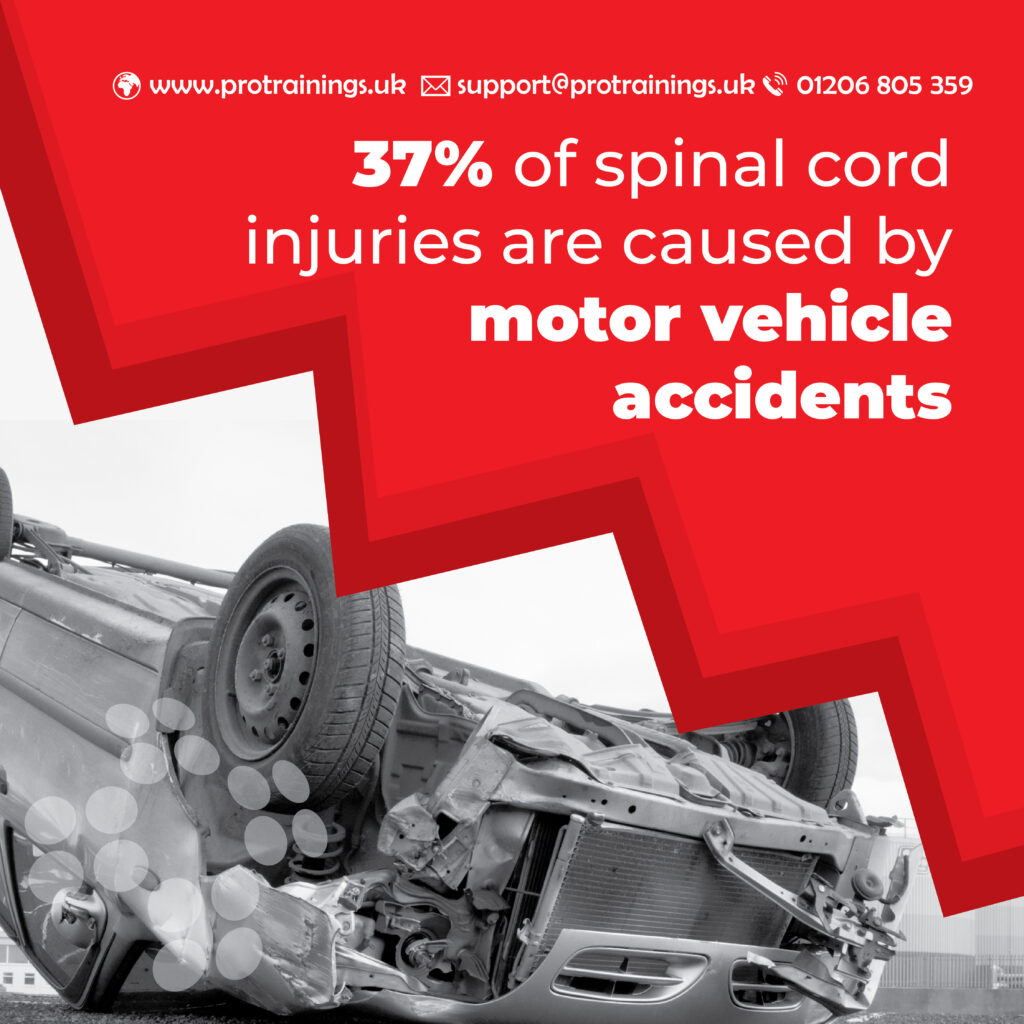
Quickly spotting potential spinal injuries is key to avoiding further harm during transport. Over 37% of spinal cord injuries are caused by motor vehicle accidents, while falls account for about 31% [5].
Be alert for these symptoms:
Also, watch for critical changes in motor and sensory function:
If you suspect a spinal injury, ensure the area is safe before acting:
When calling 911, provide clear and detailed information:
If the person is conscious, encourage them to remain still unless there’s immediate danger. While waiting for emergency responders, perform chest-compressions-only CPR if necessary, ensuring the spine stays aligned [8].
Once help is on the way, focus on stabilizing the injured person.
Keep the spine stable to avoid further injury by maintaining a neutral alignment and minimizing movement.
Follow these steps to stabilize the head and neck:
If you’re working alone, use your knees to brace the head, freeing your hands for managing the airway.
1. Size Assessment
Determine the correct collar size by measuring the space between the shoulder and chin using your fingers.
2. Application Technique
While one person maintains manual stabilization, another should:
3. Final Check
Make sure the collar supports the chin, reaches the shoulders, and does not interfere with breathing.
Preserve spinal alignment to avoid worsening the injury. Stop any attempts at realignment immediately if the patient experiences increased pain, new neurological issues, muscle spasms that affect breathing, or resistance to movement.
If alignment is necessary, proceed slowly while monitoring neurological responses. Even after applying a cervical collar, continue manual stabilization to ensure extra protection during transport.
Soft cervical collars are unsuitable for trauma cases – only use rigid collars designed for spinal immobilization [9].
Once stabilized, prepare for transport by selecting the right equipment and organizing your team.
Choosing the right equipment is critical for safe transport. A properly fitted hard collar, paired with blocks and tape, is key for cervical spine protection [10]. For full-body support, consider these options:
For seated patients who need to be removed quickly, the Kendrick Extrication Device (KED) is a specialized tool for spinal protection [10]. Once you’ve selected the equipment, focus on team positioning to maintain spinal stability during movement.
The positioning technique depends on the situation and the number of available team members. Here are the two main methods:
Clear and precise communication is essential to avoid unnecessary spinal movement and ensure everyone stays coordinated. The team leader, typically positioned at the patient’s head, should:
“When implementing spinal motion restriction, all members of the interprofessional health care professional team must be familiar with their preferred technique and exercise good communication to execute the technique properly and reduce excessive spinal motion.” – Kristopher Milland [11]
Blunt traumatic injuries result in about 54 spinal cord injury cases per million people annually in the United States [11]. Proper preparation and coordination are crucial to prevent further injury during transport. With the equipment chosen and the team aligned, the next step is focusing on transfer methods.
After stabilizing the patient and preparing the team, the next step is safely transferring the patient without causing further harm. Moving a patient with a spinal injury requires careful techniques, tailored to the patient’s position and the environment.
The log roll method ensures the body moves as a single unit to protect the spine. This approach requires 5–6 trained individuals working in sync.
When a patient is seated, such as in a car or chair, maintaining spinal alignment is key. Use specialized equipment for a smooth transfer:
Studies confirm that using proper transfer devices can help reduce the risk of additional injuries.
Water rescues come with unique challenges, requiring specific tools and methods.
Water rescue zones are divided into three areas:
When moving the patient from water, focus on controlled, efficient actions while maintaining spinal protection. Proper tools and trained personnel play a crucial role in improving outcomes in these scenarios [13][14].
During transport, it’s crucial to keep the patient immobilized to prevent further injuries. This involves maintaining spinal alignment, protecting pressure points, and managing body temperature.
Use restraints to limit spinal movement and maintain proper alignment. Spinal immobilization helps reduce unnecessary motion of the spinal column [15].
Here’s how to ensure proper security:
Vacuum mattresses are especially effective as they provide excellent stability and limit movement, even around the head [10].
Prolonged time on rigid surfaces can lead to pressure sores [2]. To avoid tissue damage:
Patients with spinal cord injuries often struggle with temperature regulation [17]. Adjust temperature management based on weather conditions:
In Hot Weather:
In Cold Weather:
“The most important thing is to avoid extreme temperatures.” – Shirley Ryan AbilityLab – Spinal Cord Injury Team [17]
The steps outlined above ensure a well-coordinated and safe transfer for patients with spinal injuries. Precision and proper training are crucial to safeguard the patient and avoid further harm.
ProTrainings Europe (https://protrainings.uk) offers courses focused on spinal injury management techniques. Their training highlights practical experience with tools like spine boards, cervical collars, and vacuum mattresses.
“When an athlete is suspected to have a spine injury, every moment and every movement counts”, says Tory Lindley, MA, ATC, NATA President [20].
To stay prepared, teams should:
These practices support the essential steps outlined next.
Key actions for safe spinal injury transport include:
Initial Response
Immobilization
Transport Considerations
Careful handling and proper positioning help minimize discomfort and avoid complications. Prompt transport to a medical facility, while maintaining immobilization, is critical for the best outcomes [3]. By following these steps, teams uphold their commitment to patient safety throughout the process.