This site is powered by the ProTrainings platform. All content is © 2025, ProTrainings Europe Ltd. All rights reserved.


Pro Trainings is rated 4.6 out of 5 based on 70450 ratings.
This site is powered by the ProTrainings platform. All content is © 2025, ProTrainings Europe Ltd. All rights reserved.
Pro Trainings is rated 4.6 out of 5 based on 70450 ratings.

Did you know that 55% of employees lack access to first aid or CPR training at work? This leaves many workplaces unprepared for emergencies where quick action could save lives. First aid training teaches you how to respond immediately to injuries or medical emergencies until professional help arrives. Here’s what you need to know:
First aid training not only saves lives but also ensures a safer and more prepared workplace. The article explores these aspects and provides actionable tips to implement effective training programs.
First aid training is a critical extension of workplace safety, enabling quick and effective responses during emergencies. This training helps minimize the severity of injuries until professional medical assistance arrives [3].
CPR is a must-know skill, especially since about 10,000 workplace cardiac arrests happen every year [3]. The American Red Cross emphasizes that proper CPR involves performing 100–120 chest compressions per minute, with a depth of at least 2 inches and correct hand positioning [3]. Surprisingly, only half of employees know where to find an Automated External Defibrillator (AED) at work [3]. Yet, when used alongside CPR, AEDs can increase survival rates by two to three times for cardiac arrest victims [5].
First aid training also covers how to handle common workplace injuries. Here’s a quick guide to typical response actions:
| Injury Type | Primary Response Actions | Critical Considerations |
|---|---|---|
| Burns | Cool with running water; remove jewelry | Avoid breaking blisters or applying creams |
| Cuts/Wounds | Apply direct pressure; clean thoroughly | Use sterile dressings; monitor for bleeding |
| Fractures | Immobilize the area; support joints | Do not attempt to realign bones |
| Allergic Reactions | Assist with prescribed medication | Ensure emergency supplies are accessible |
These actions are the foundation for practical training exercises.
Hands-on practice is essential for building confidence and coordination during emergencies [6].
“When you understand first aid, you’ll gain the ability to help those in need… This gives them the best opportunity for a positive outcome – and gives you the opportunity to change someone’s life for the better.” – American Red Cross [4]
Incorporate workplace-specific drills, such as:
These exercises ensure employees are prepared to handle real-life emergencies effectively.
Keeping first aid certifications up to date is essential for maintaining workplace safety and ensuring readiness during emergencies.
Most first aid and CPR certifications are valid for approximately two years [7]. However, healthcare professionals often need to recertify annually [8]. Key skills like CPR and AED usage should be reviewed more frequently, ideally every six months [9].
To stay prepared between recertifications, focus on refreshing these critical areas:
Keep an eye on certification expiration dates and plan renewals well in advance. Regular training updates not only sharpen skills but also contribute to a safer workplace.
“First‐aid courses should be individualized to the needs of the workplace.” – OSHA [9]
A consistent recertification process ensures your team is always ready to handle emergencies effectively.
Ensuring compliance with first aid regulations is a key responsibility for creating a safe and lawful workplace. OSHA provides clear guidelines that employers must follow to guarantee proper first aid measures are in place.
First aid supplies should be stored in weatherproof containers, kept in good condition, and easily accessible to employees. The supplies must match the workplace’s size and the potential hazards, with regular checks to restock as needed.
“In the absence of an infirmary, clinic, or hospital in near proximity to the workplace which is used for the treatment of all injured employees, a person or persons shall be adequately trained to render first aid. Adequate first aid supplies shall be readily available.” – OSHA Standard 29 CFR 1910.151(b) [12]
This OSHA standard highlights the importance of having both trained personnel and accessible first aid resources.
Employers must ensure that first aid kits meet ANSI/ISEA Z308.1-2021 standards [11]. Class A kits are recommended for handling common injuries, while Class B kits are better suited for workplaces with more complex or higher-risk environments [13].
Additionally, personnel responsible for first aid must maintain up-to-date certifications [10]. The number of trained staff should reflect the workplace’s size, layout, and specific risks, as well as its distance from medical facilities. High-risk industries, in particular, should conduct detailed risk assessments to determine the appropriate level of first aid readiness [11]. Access to healthcare professionals for consultation is also advised.
Effective first aid training prepares employees to handle emergencies until professional help arrives [14]. It turns unprepared individuals into capable responders, boosting their confidence and improving teamwork [15]. This training strengthens collaboration and support among coworkers, ensuring a well-coordinated response during emergencies.
First aid training doesn’t just improve individual skills – it also enhances overall workplace safety. Here’s how:
| Safety Focus Area | Impact of First Aid Training |
|---|---|
| Risk Awareness | Employees become more aware of workplace hazards and the likelihood of injuries. |
| Preventive Behavior | Workers are more motivated to avoid injuries and take proactive steps to control risks. |
| Response Time | Emergencies are handled faster, leading to shorter recovery times and less downtime. |
| Accident Prevention | A stronger focus on safety practices leads to fewer workplace accidents. |
This training encourages a proactive approach to safety. Employees become more alert to hazards, take preventive actions, respond quickly in emergencies, and help reduce accidents [16]. It fosters a shared sense of responsibility for maintaining a safe work environment.
Investing in first aid training also benefits businesses. Faster emergency responses by trained staff can shorten recovery times and limit productivity losses [1]. Plus, employees feel valued when organizations prioritize their safety, which boosts morale [1][16].
Choosing the right first aid training provider is crucial for maintaining workplace safety and meeting OSHA requirements. According to OSHA, businesses must offer CPR and first aid training if medical facilities aren’t easily accessible nearby [17]. Here’s a guide to help you make an informed decision.
Certification standards are a key factor when assessing first aid training providers. Programs should comply with OSHA’s First Aid Standard 29 CFR 1910.151 and follow the latest CPR guidelines [19]. Here’s what to look for:
| Certification Aspect | Requirements |
|---|---|
| Renewal Timeline | CPR certification updated annually; first aid certification every three years [17] |
| Course Content | Must include strategies for addressing common workplace injuries |
| Compliance | Aligns with National Guidelines for First Aid in Occupational Settings |
| Instructor Qualifications | Instructors should have verified teaching credentials and relevant experience |
It’s also important to ensure these certifications address the specific risks within your industry.
Different industries face unique risks, so training should be tailored accordingly. The National Safety Council stresses the importance of customizing training to handle industry-specific hazards [19]. For example, training should cover responses to injuries like severe bleeding, shock management, and treating wounds in critical areas, ensuring relevance to your workplace [18].
First aid training is now available in various formats, offering flexibility while maintaining effectiveness. Research indicates that online learning can be as effective as traditional classroom settings [20]. Here are the main options:
| Training Format | Benefits | Considerations |
|---|---|---|
| Online Only | Cost-effective, flexible schedules, and self-paced learning | Limited hands-on practice opportunities |
| In-Person | Hands-on practice, direct instructor feedback, and peer interaction | Higher costs and fixed schedules |
| Blended Learning | Combines online learning with in-person skills practice | Requires both online and in-person attendance |
To ensure the training meets your needs, confirm that online certifications align with your workplace safety requirements [20].
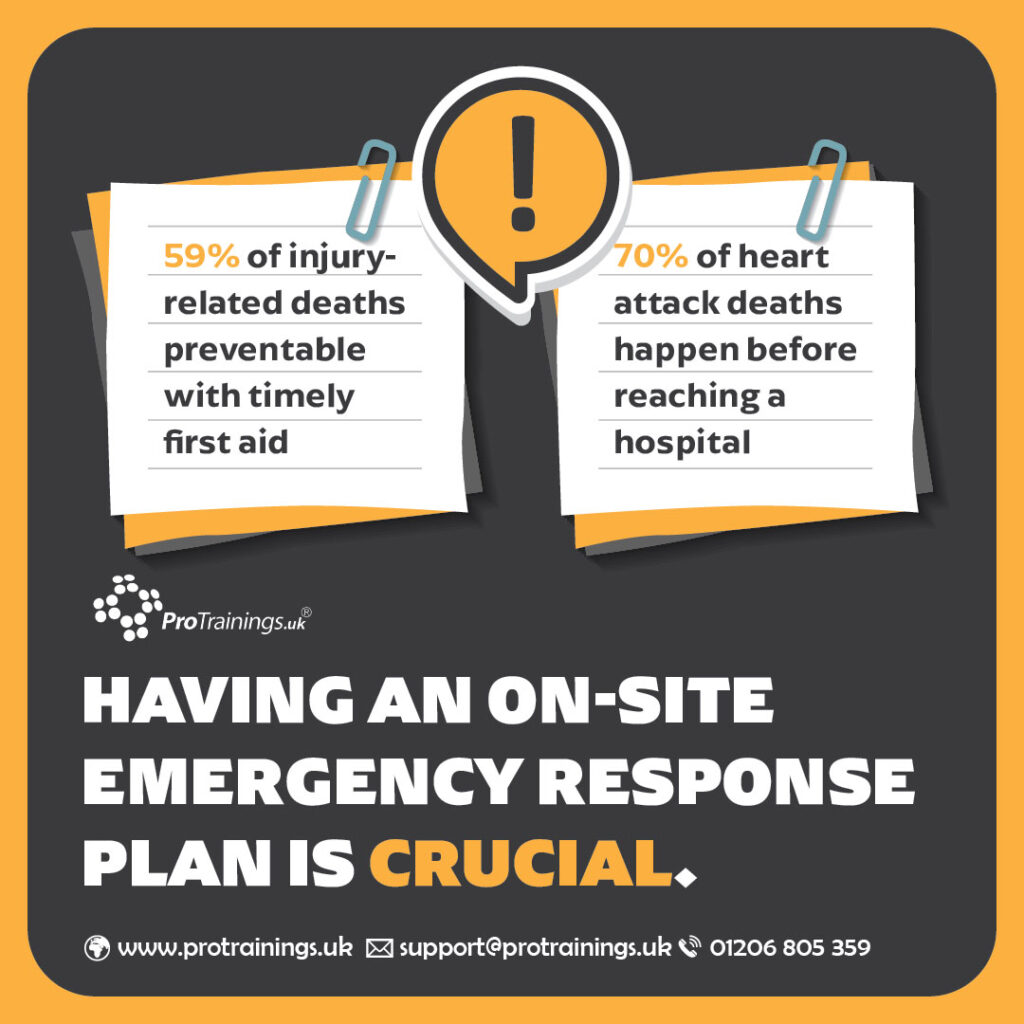
First aid training plays a key role in ensuring workplace safety and supporting employee well-being. With 70% of heart attack deaths happening before reaching a hospital [2] and 59% of injury-related deaths preventable with timely first aid [21], having an on-site emergency response plan is crucial.
Its benefits go beyond immediate emergencies. Companies that provide thorough first aid training often report better safety outcomes. For instance, survival rates for workplace cardiac arrests can rise from 5–7% to as high as 60% when an AED is used by a trained responder [22].
However, there are gaps in preparedness. Only 38% of Americans feel confident managing workplace emergencies, and 55% say their employers don’t offer regular training [22]. Organizations that invest in first aid programs see tangible results, including faster recovery times, reduced hospital costs, and lower absenteeism [21].
Here’s how to make first aid training programs more effective:
| Focus Area | Action Steps |
|---|---|
| Program Design | Tailor the curriculum to workplace-specific risks and evidence-based practices [23] |
| Training Delivery | Use hands-on practice and scenario-based exercises [23] |
| Maintenance | Offer regular refresher courses and certification renewals [21] |
| Equipment | Ensure first aid supplies are up-to-date and easy to access [22] |
“First aid training serves as a critical line of defense against workplace injuries and medical emergencies”, says Vector Solutions [21]. This training empowers employees to respond effectively when it matters most.
Additionally, over 65% of employees view companies offering CPR/AED or first aid training more positively [22]. Beyond safety, this commitment strengthens workplace culture and fosters trust.