This site is powered by the ProTrainings platform. All content is © 2025, ProTrainings Europe Ltd. All rights reserved.


Pro Trainings is rated 4.6 out of 5 based on 70450 ratings.
This site is powered by the ProTrainings platform. All content is © 2025, ProTrainings Europe Ltd. All rights reserved.
Pro Trainings is rated 4.6 out of 5 based on 70450 ratings.

Emergencies can be frightening and overwhelming, whether it’s a medical incident at home, a workplace accident, or an unexpected situation in public. Here’s how to maintain composure, make effective decisions, and provide confident care when it matters most.
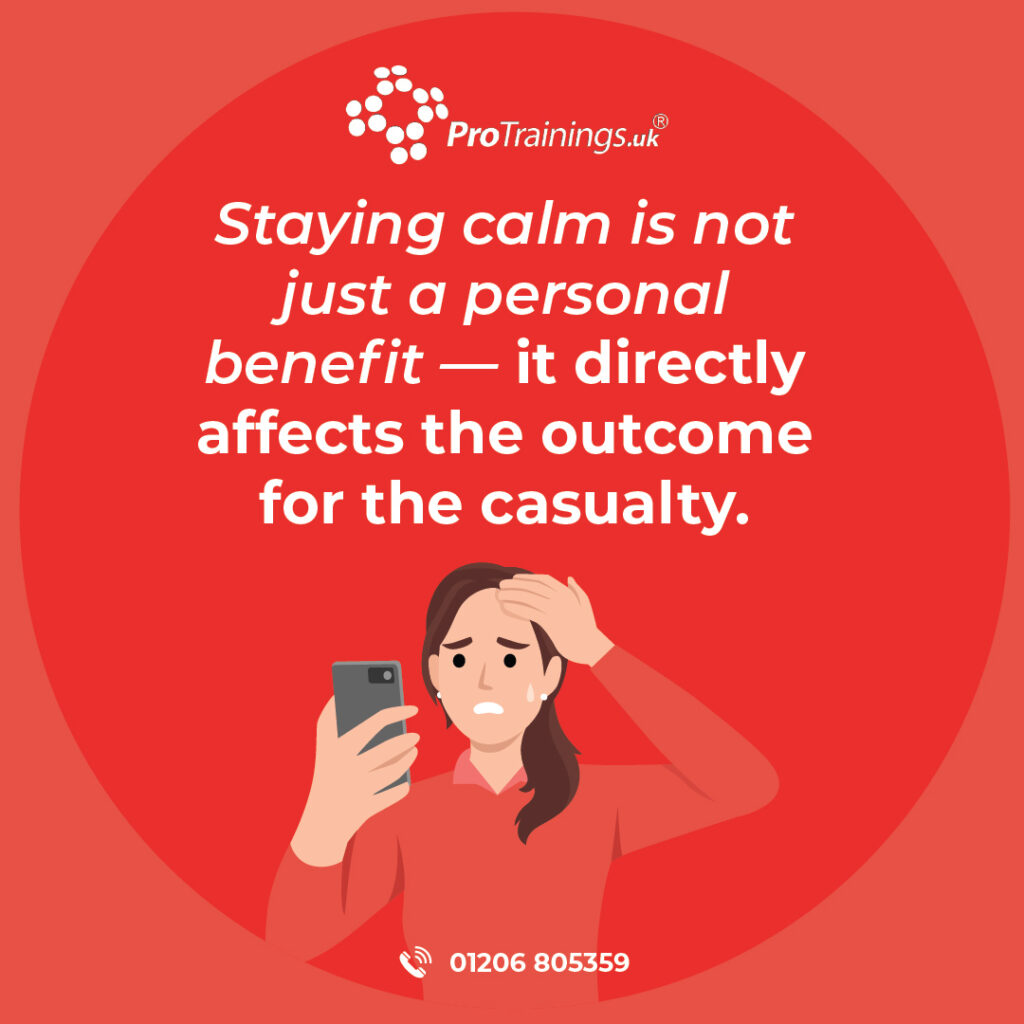
The first and simplest step in any stressful situation is to pause and breathe. Even a few deep breaths can:
A calm mind is far more effective than a panicked one.
Before acting, quickly evaluate the scene:
Having a structured approach keeps you grounded and prevents rash decisions.
In a stressful scenario, it’s easy to overthink. Stick to fundamental first aid principles:
Following familiar routines keeps your mind occupied and ensures nothing critical is overlooked.
Clear communication reduces stress for everyone involved:
This not only helps the casualty but also keeps bystanders coordinated and calm.
Many experienced first aiders use techniques to maintain composure under pressure:
These mental anchors keep anxiety at bay and improve decision-making.
Confidence is built through preparation:
Repetition makes your responses almost automatic, so in real emergencies, your body knows what to do even if your mind feels pressured.
Dealing with emergencies can be emotionally and physically draining. Once the situation is resolved:
Remaining composed in an emergency isn’t about being fearless — it’s about preparation, focus, and confidence. The calmer you are, the better the care you can provide. With practice, structured thinking, and self-awareness, any first aider can act decisively, protect themselves and the casualty, and make a real difference.
Want to feel more confident in emergencies?
Explore our range of first aid courses at www.protrainings.uk/courses and browse essential first aid equipment at www.protrainings.uk/store to be fully prepared.