This site is powered by the ProTrainings platform. All content is © 2025, ProTrainings Europe Ltd. All rights reserved.


Pro Trainings is rated 4.6 out of 5 based on 70450 ratings.
This site is powered by the ProTrainings platform. All content is © 2025, ProTrainings Europe Ltd. All rights reserved.
Pro Trainings is rated 4.6 out of 5 based on 70450 ratings.

When we think of first aid, most of us picture bandages, CPR, or dealing with physical injuries. But mental health first aid is just as important. Many people will experience anxiety, depression, or another mental health challenge at some point in their lives. Knowing how to recognise early signs and respond appropriately can make a huge difference, even if you’re not a healthcare professional.
Mental health issues can affect anyone. In the workplace, schools, and our personal lives, these challenges are often hidden but can have a big impact on wellbeing, relationships, and safety. While only a trained professional can diagnose or treat a mental health condition, anyone can learn to notice the signs and offer initial support.
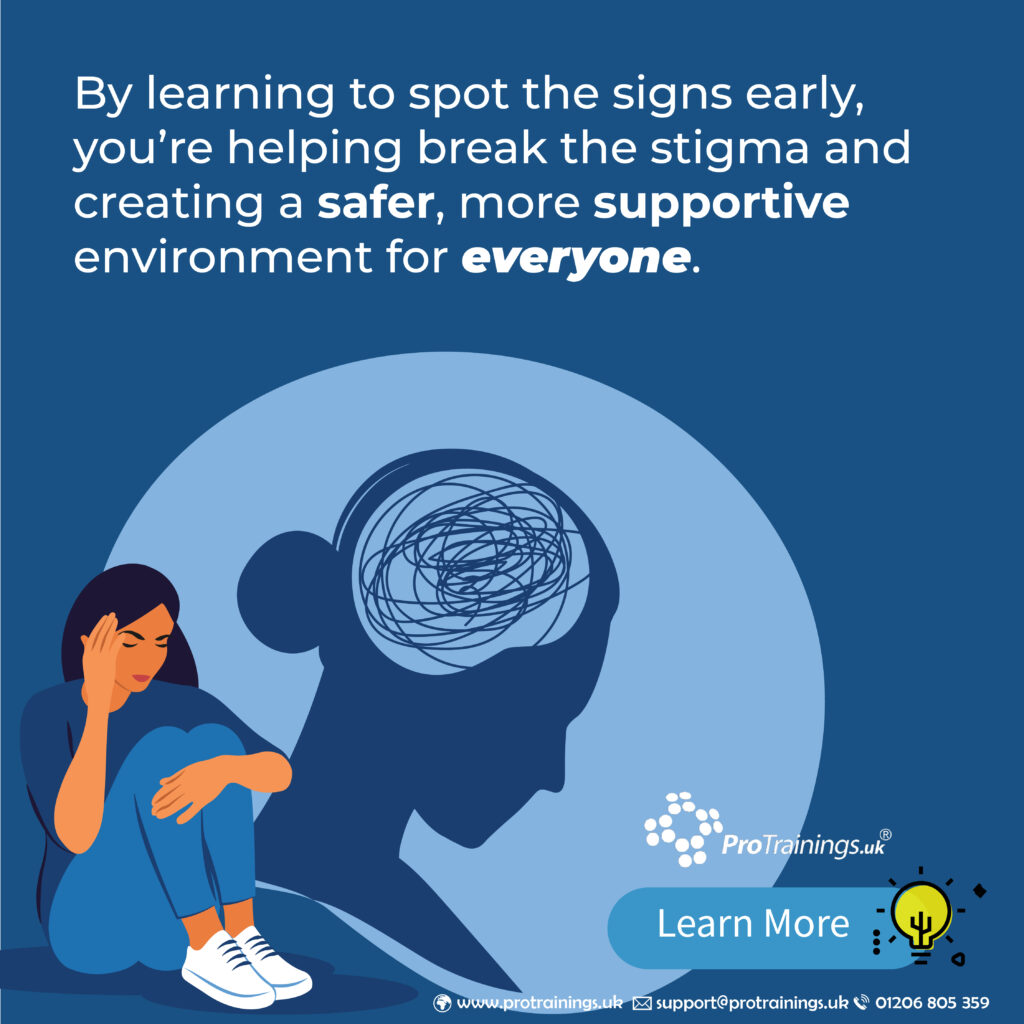
Every individual is different, but there are some general signs that may indicate someone is struggling:
Recognising these signs early can allow for timely support before the situation worsens.
You don’t need to have all the answers. Mental health first aid is about listening, reassuring, and guiding the person towards professional help if needed.
If someone is experiencing a panic attack:
If you believe someone is at risk of suicide or self-harm, do not leave them alone. Call emergency services or a crisis helpline straight away.
If you’d like to build deeper knowledge and confidence in supporting mental health, ProTrainings offers the TQUK Level 1 Award in Mental Health Awareness (RQF). protrainings.uk
Here’s what you can expect from this course:
By taking this course, you can go beyond just noticing and caring — you’ll develop the expertise to support others more confidently and responsibly.
Supporting someone else can be emotionally draining. Make sure you also take care of your own wellbeing, and don’t be afraid to seek support if you need it.
Mental health first aid is about compassion and awareness. You don’t need to be a professional to make a difference – listening, supporting, and encouraging the right help can change someone’s life. By learning to spot the signs early, you’re helping break the stigma and creating a safer, more supportive environment for everyone.