Allergy Awareness for Schools Level 2 (VTQ) - Benedict Law
Online Training Course

Video Playtime
1 hour and 54 minutes
Video Count
54 videos
Audio
English
Captions
English
Proof of Completion
Certificate
This Course Includes:
- Follows UK & ERC guidelines
- 4.0 hrs CPD Certificate
- Evidence Based Training Certificate
- Instant printable wall certificate
- 24/7 on-demand video
- Access on mobile
- Weekly refresher video
- Expiration reminder
Preview the course content:
Section 1
Course Introduction
.jpg)
- Course Introduction 2:12
- Why this training is important 3:42
- Benedict’s Law and the Statutory Guidance for Schools 3:36
- and more...
Section 2
Food Allergens

- Dietary requirements 2:50
- Facts about food allergies 1:22
- Food intolerance 1:14
- and more...
Section 3
Allergen Controls

- Allergen controls 1:02
- Cross-contamination direct and indirect 2:34
- Preventing cross-contamination 2:23
- and more...
Section 4
About Anaphylaxis

- About Anaphylaxis 3:35
- What is Anaphylaxis 2:04
- Living with Anaphylaxis 1:44
- and more...
Section 5
Auto Injector Types, Storage and Disposal

- What is an Auto-Injector? 2:04
- EpiPen® 1:52
- Jext® 2:23
- and more...
Section 6
Signs, Symptoms and Treatment

- Signs and Symptoms of Anaphylaxis 1:24
- Basic First Aid Advice 1:51
- Anaphylaxis patient position 2:24
- and more...
Section 7
Managing Allergies

- Managing allergies on school trips 2:29
- Allergy safety in clubs and activities 2:28
- Allergy bullying and safeguarding 2:23
- and more...
Section 8
Course Summary

- Practice and keeping up to date 0:50
- Course Summary 2:07
over 3 million certifications issued to date
Why ProTrainings?
Convenience
Train Anywhere, On Any Device
Master Quality
Expert Instructors for Every Subject
Speed
Same-Day Completion
Trusted
Compliant & Secure


Who needs Allergy Awareness for Schools Level 2 (VTQ) - Benedict Law training?
Most people take Allergy Awareness for Schools Level 2 (VTQ) - Benedict Law training as a requirement for their job or for their personal life. Whether you work in healthcare or another profession or are simply looking for a new qualification, ProTrainings has the course that is suitable for you! Online courses allow you to train at your own pace, in your own time.
Some professionals that may need a Allergy Awareness for Schools Level 2 (VTQ) - Benedict Law course include:
- Why this training is important
- Benedict’s Law and the Statutory Guidance for Schools
- Staff responsibilities and duty of care
- Dietary requirements
- Facts about food allergies
- Food intolerance
- Food Allergies
- Notifiable Food Allergens
- Hidden Ingredients
- Oils
- Consequences of poor allergen controls
- Allergen controls
- Cross-contamination direct and indirect
- Preventing cross-contamination
- Allergy management plans
- About Anaphylaxis
- What is Anaphylaxis
- Living with Anaphylaxis
- Minor allergic reactions
- Common causes of allergic reactions
- Idiopathic Anaphylaxis
- Activating the EMS
- Medical ID tags for allergies
- Recognising the signs of an allergic reaction
- Allergy triggers in the school environment
- What is an Auto-Injector?
- EpiPen®
- Jext®
- Live Auto Injectors
- Auto Injector demonstration
- Storage and disposal
- Storage of auto injectors - Pharmacist comments
- Who prescribes auto injectors?
- Checking Auto Injector and Expiry Dates
- Anaphylaxis kit by Kitt Medical
- Adrenaline nasal spray for anaphylaxis
- Where adrenaline medications are stored
- Signs and Symptoms of Anaphylaxis
- Basic First Aid Advice
- Anaphylaxis patient position
- Schools and teachers
- Giving a second dose
- Biphasic Anaphylactic Response
- Immunotherapy drugs
- Teenagers and hypersensitivity
- What other staff should do
- After the incident
- Managing allergies on school trips
- Allergy safety in clubs and activities
- Allergy bullying and safeguarding
- Communicating with parents
More about this course
This Allergy Awareness for Schools Level 2 course provides comprehensive training for school staff to effectively manage allergies and respond to allergic reactions within an educational setting. It is designed to support schools in meeting their legal and professional responsibilities to safeguard pupils with medical conditions, including severe allergies.
In the UK, schools have a duty of care under the Health and Safety at Work etc. Act 1974 to protect the health, safety, and welfare of pupils, staff, and visitors. In addition, the Children and Families Act 2014 places a clear responsibility on schools to make arrangements to support pupils with medical conditions. Department for Education guidance also expects schools to have robust policies and procedures in place to manage conditions such as allergies and anaphylaxis safely.
This course covers the key differences between food allergies and intolerances, common allergens, and the potentially life-threatening risks associated with poor allergen control. Learners will develop practical knowledge on how to identify hidden ingredients, prevent cross-contamination, and implement effective allergen management strategies across the school environment.
A strong emphasis is placed on allergy management plans (individual healthcare plans), ensuring staff understand how to reduce risks and respond appropriately. The course highlights the importance of clear communication with parents, carers, and healthcare professionals, helping to create a safe and consistent approach across classrooms, catering areas, extracurricular activities, and school trips.
The training provides detailed guidance on recognising and responding to allergic reactions, including mild, moderate, and severe reactions such as anaphylaxis. Learners will understand how to identify symptoms quickly, take appropriate action, contact emergency medical services, and administer life-saving treatment using adrenaline auto-injectors such as EpiPen® and Jext®.
Practical advice is also included on the safe storage, accessibility, and regular checking of medication, including expiry dates and emergency readiness. The course also covers post-incident procedures, recording requirements, and reviewing control measures to help prevent future incidents.
Additional topics include supporting pupils living with allergies, recognising the impact on their wellbeing, and addressing safeguarding concerns such as allergy-related bullying. The course reinforces the importance of ensuring that all staff understand their roles and responsibilities in maintaining a safe, inclusive, and prepared school environment.
By the end of this course, learners will have the knowledge, confidence, and practical skills needed to manage allergies effectively, reduce risks, and respond quickly and appropriately in an emergency—helping schools create a safer environment for every pupil.
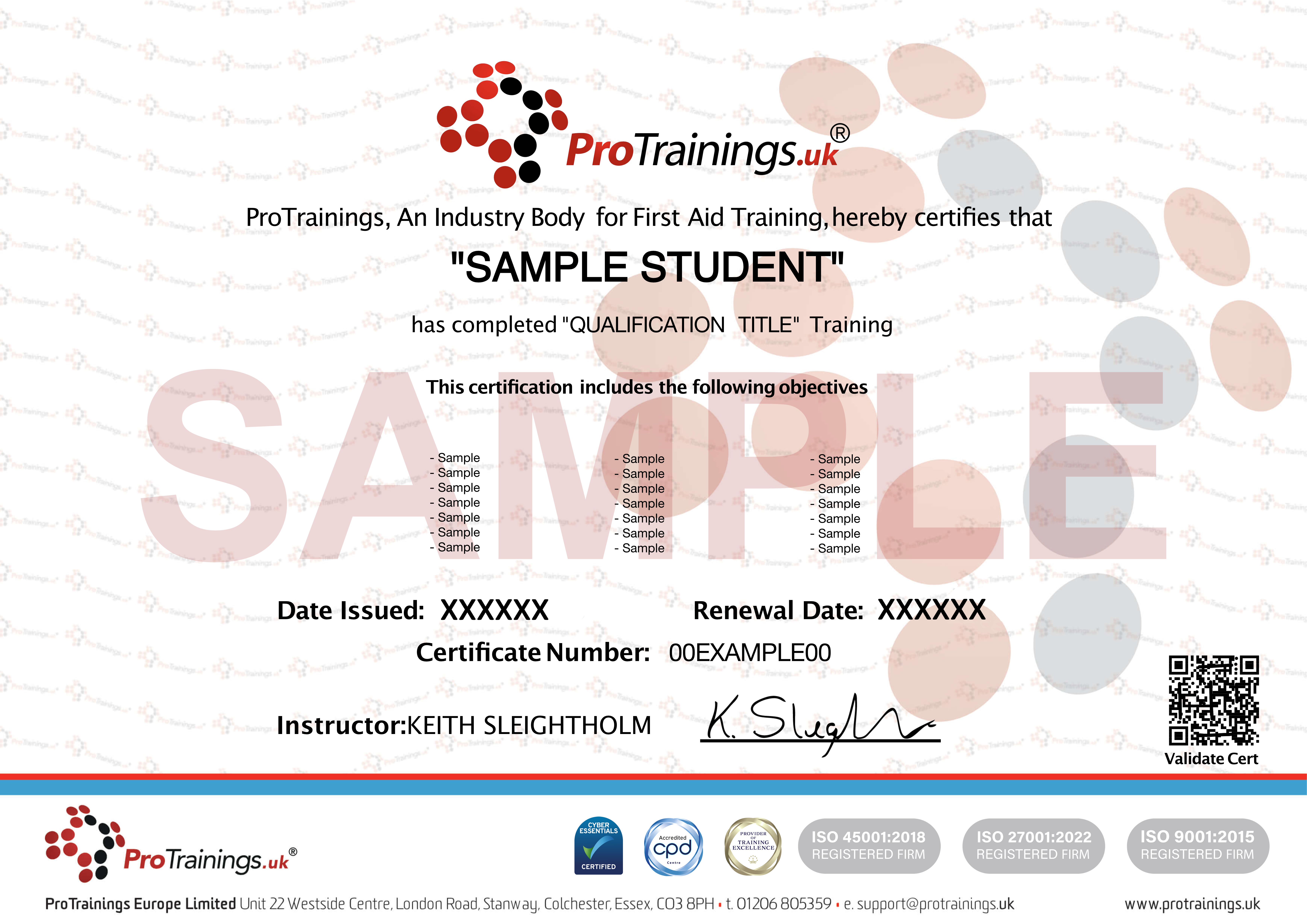
This course comes with 4.0 hours of CPD, although the time to complete the course online may be less than this. Total course time includes 1 hour and 54 minutes of video training as well as knowledge reviews, final test, remedial help and reviewing downloaded material.
The content of this and all our courses has been independently certified as conforming to universally accepted Continuous Professional Development (CPD) guidelines and come with a Certified CPD Statement as well as a ProTrainings Certificate and for online courses an Evidence Based Learning statement.
Reviews
Frequently Asked Questions

What is CPD and why is having Certified CPD important?
CPD stands for Continuous Professional Development and is required in many business sectors. Even if you do not require a set CPD credit level, having Certifed CPD ensures the quality of training. ProTrainings are the highest gold standard of CPD ensuring that all courses are externally verified and mapped to the highest levels.
What is "SCORM ready" and will courses run on a LMS?
SCORM Ready means that online courses can run on any compatible Learning Management System (LMS). SCORM courses run seamlessly on your existing LMS system without a separate login so staff only login using the existing company system. ProTrainings online courses have an advanced SCORM ready system to give more features than any other company.
Do I receive a certificate after completing your online training?
Yes, when you complete the online course you will be able to download and print a compliant completion certificate, evidenced-based learning statement to confirm course content and a certified CPD statement. There is no extra charge for the certificate. You can also buy a printed certificate to be posted to you for a small extra fee.
What training courses do you offer and how are they delivered?
We offer a full range of training courses across all business sectors as video online, blended and nationwide at your business or our local training centres. With over 350 courses you can learn at a time and place that meets your busy schedules and save money on travel and costs away from the office.
Group Trainings for your Organisation