Supporting Mental Health in Adventurous Settings (VTQ)™
Classroom Training Course


This Course Includes:
- Meets HSE Recommendations
- 6.0 hrs CPD Certificate
- Evidence Based Training Certificate
- Instant printable wall certificate
- Expiration reminder
- Student manual
- This course is valid for 3 years
This Course is Perfect For...
Course Curriculum
1. Understand the difference between mental health and mental ill health.
- 1.1 Describe how mental health affects human behaviour
- 1.2 Understand mental health and how it relates to mental ill health
2. Describe the components of mental well-being and how it relates to resilience.
- 2.1 Be able to provide examples of well-being
- 2.2 Understanding resilience and the capacity to stay mentally well during difficult situations
- 2.3 Understand how to positively support individual well-being
3. Understand how risk factors associated with mental ill health can lead to problems.
- 3.1 Be aware of risk factors that are caused from mental health
4. Be able to recognise how mental health problems can affect day-to-day living
- 4.1 Recognise how mental health can lead to other known character traits
- 4.2 Understand how mental health problems can affect normality from one day to another
5. Understand how social and cultural attitudes can lead to mental illness
- 5.1 Recognise how stigma and discrimination can lead to overwhelming influences on individuals, communities and societies
- 5.2 Understand how stereotyping can lead to prejudice, discrimination and inequality
6. Understanding causes of stress and knowing how stress can stem from influences resulting
- 6.1 Understand what stress is and how it is commonly defined
- 6.2 Be able to recognise the signs and symptoms of useful stress and harmful stress
- 6.3 Be able to manage stress on expedition and self-management
7. Be able to understand the difference between an Anxiety and a Panic attack
- 7.1 Describe what an anxiety is and how it becomes a mental health problem
- 7.2 Define what a panic attack is
- 7.3 Recognise the physical and psychological signs and symptoms of anxiety
- 7.4 Be able to understand what depression is, how it is defined and what the common symptoms are
- 7.5 Be familiar with how to manage depression from a personal aspect
8. Understand why mental health is not discussed
- 8.1 Be able to understand why Participants do not discuss mental health
9. Be aware of other types diagnosable mental health conditions Phobia, Obsessive compulsive disorder, Eating problems, Bipolar disorder, Schizophrenia, Personality disorder, Psychosis, Self-harm,Post-Traumatic stress disorder (PTSD), Alzheimer's disease/ Dementia, Home sicknes
10. Be able to understand The expedition specific mental health concerns
- 10.1 Pre-departure and preparation
- 10.2 Be able to explain stress areas and reasons on expeditions
- 10.3 Understand comfort zones in relation to mental health and expeditions
- 10.4 Understand your role as an Leader – duty of care and obligations
- 10.5 Be able to communicate with a person in crisis
11. Be able to understand how an Participants emotional intelligence enables them to manage their emotions with other people, both individually and in groups.
- 11.1 Understand the 5 components of emotional intelligence
- 11.2 Be able to recognise a change in an participant on an adventurous activity
- 11.3 Understand Fixed and growth mindsets
12. Be able to recognise other types of legislation that applies to Mental Health UK
- 12.1 Describe how difficult it is to discloses mental health
- 12.2 Explain how to start a conversation with a participant who has a suspected mental health condition
- 12.3 Know what advice to provide during a discussion with a colleague, friend or family relative
- 12.4 Be able to provide support to an participant
13. Be able to implement an action plan to promote a healthy workplace
- 13.1 Understand correct reporting procedures for your workplace and who to report to with suspected mental ill health
- 13.2 Know how to promote a healthy workplace
- 13.3 Be familiar with five key steps that help boots individual mental wellbeing
- 13.4 Be able to help a person form a safety plan
- 13.5 Be able to help a person build a personal Toolbox
14. Have an awareness of the mental health drugs that Participants may bring on expedition
15. Know about and be able to advise participants on post expedition depression
16. Understand the value of an other adventurous activity on mental health
over 3 million certifications issued to date
Why ProTrainings?
Convenience
Train Anywhere, On Any Device
Master Quality
Expert Instructors for Every Subject
Speed
Same-Day Completion
Trusted
Compliant & Secure
More about this course
This course provides a comprehensive understanding of mental health and equips participants with the knowledge and skills to support individuals facing mental health challenges during outdoor adventures. Through a series of modules, participants will delve into various aspects of mental health and mental illness, exploring their impact on human behaviour and the relationship between them. The course also focuses on the components of mental well-being and resilience, highlighting examples of well-being and strategies for staying mentally well in difficult situations.
Expedition-specific mental health concerns are addressed, covering pre-departure preparation, stress areas and reasons during expeditions, comfort zones in relation to mental health, and the role of leaders in providing duty of care and support. Effective communication with individuals in crisis is also emphasised.
The course highlights the importance of emotional intelligence in managing one's own emotions and those of others during adventurous activities. Participants will explore the components of emotional intelligence, recognise changes in participants' behaviour, and gain an understanding of fixed and growth mindsets.
This course comes with 6.0 hours of CPD, although the time to complete the course online may be less than this.
The content of this and all our courses has been independently certified as conforming to universally accepted Continuous Professional Development (CPD) guidelines and come with a Certified CPD Statement as well as a ProTrainings Certificate and for online courses an Evidence Based Learning statement.
- Student Manual (V8.3) - Mental Health
- 5 ways to wellbeing link
- Find out what other courses are available as video online, blended and classroom courses nationally - our course finder
- Free student first aid program leaflet
- HSE pages on workplace stress
- How to be mentally healthy at work - MIND leaflet link
- MIND website
- Mental Health Organisations
- NHS Mental Health website
- Sign up for free Student First Aid - use code SCH-376-61-571
- Skills for Care Website
- Understanding anxiety and panic attacks - MIND leaflet link
- Understanding depression - MIND leaflet link
- Understanding mental health problems - MIND leaflet link
- Visit the First Aid Show free for first aid and medical videos
- Woundclot - haemostatic gauze for all types of bleeding
Frequently Asked Questions

What is CPD and why is having Certified CPD important?
CPD stands for Continuous Professional Development and is required in many business sectors. Even if you do not require a set CPD credit level, having Certifed CPD ensures the quality of training. ProTrainings are the highest gold standard of CPD ensuring that all courses are externally verified and mapped to the highest levels.
What is "SCORM ready" and will courses run on a LMS?
SCORM Ready means that online courses can run on any compatible Learning Management System (LMS). SCORM courses run seamlessly on your existing LMS system without a separate login so staff only login using the existing company system. ProTrainings online courses have an advanced SCORM ready system to give more features than any other company.
Do I receive a certificate after completing your online training?
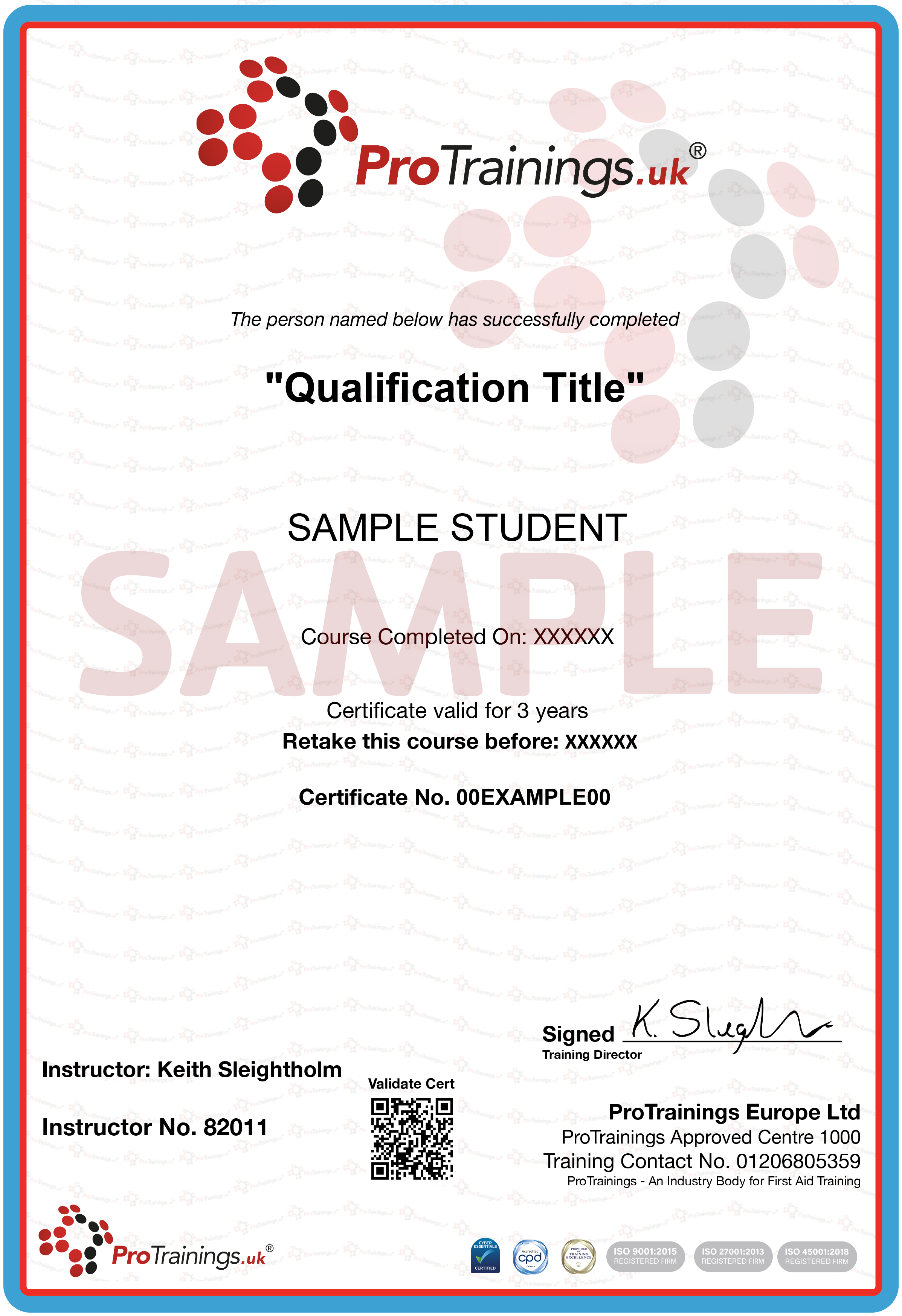
Yes, when you complete the online course you will be able to download and print a compliant completion certificate, evidenced-based learning statement to confirm course content and a certified CPD statement. There is no extra charge for the certificate. You can also buy a printed certificate to be posted to you for a small extra fee.
What training courses do you offer and how are they delivered?
We offer a full range of training courses across all business sectors as video online, blended and nationwide at your business or our local training centres. With over 350 courses you can learn at a time and place that meets your busy schedules and save money on travel and costs away from the office.
Group Trainings for your Organisation