PACC Children's Transportation First Aid (VTQ)™
Classroom Training Course
The Children’s Transportation First Aid course provides learners with the essential knowledge and practical skills required to recognise and respond effectively to a wide range of first-aid situations involving children during transportation. The course is designed to ensure participants can preserve life, prevent conditions from worsening and promote recovery while maintaining a safe environment for both themselves and those they care for.
Learners are introduced to fundamental first-aid principles, including personal safety, initial assessment, the primary survey (DRAB), and the importance of obtaining consent. The course explains how to recognise and manage fears associated with providing first aid while building confidence in responding to emergencies.
A major component of the training includes managing airway and breathing issues. Learners are taught when and how to place a child in the recovery position, how to identify abnormal or absent breathing, and how to activate emergency services. CPR skills feature prominently, with specific guidance on adult, child and drowning protocols, including compressions-only CPR, the adapted approach for COVID-19 safety and child-specific sequences such as providing initial rescue breaths.
The course also covers recognising and responding to sudden cardiac arrest and includes guidance on safe AED use, pad placement, shock delivery and continuing care until help arrives. Learners are shown how to manage choking in both adults and older children using back blows, abdominal thrusts and modifications for pregnancy or size limitations.
Other key topics include serious bleeding control, sling application, recognising and treating hypovolaemic shock, spinal injury considerations and conducting a head-to-toe injury assessment. The course also explores management of dislocations, fractures, head injuries, nosebleeds and a range of medical emergencies such as anaphylaxis (including auto-injector use), epilepsy, diabetic emergencies, asthma attacks and hyperventilation. All content is contextualised for the transportation environment, where rapid recognition and safe decision-making are vital.
Learners also receive guidance on emergency communication tools such as What3Words, enabling precise location sharing during incidents. Additional administrative elements include coronavirus safety measures, certification details and the process for completing digital or paper-based assessments.
Upon successful completion, learners gain access to downloadable manuals, videos and CPD documentation through the ProTrainings platform. They are reminded of the importance of regular refresher training, with annual updates recommended and practical skills refreshers available.
Overall, the course equips learners with the competence and confidence to manage first-aid incidents involving children safely and effectively during transport settings, ensuring high standards of care aligned with recognised first-aid practice.
This Course Includes:
- Follows UK & ERC guidelines
- Evidence Based Training Certificate
- Instant printable wall certificate
- Expiration reminder
- Student manual
- This course is valid for 3 years
This Course is Perfect For...
Course Curriculum
- Introduction to First Aid
- Prevention of accidents and Keeping safe in an emergency
- Looking after someone in need
- Unconscious but breathing
- Adult and older children CPR
- Child and Infant CPR
- Hands-only CPR
- Choking
- Heart Attack and Stroke
- Serious Bleeding and Shock
- Broken bones and spinal injury
- Allergic Reaction
- Asthma and Breathing Problems
- Summary and learning more
over 3 million certifications issued to date
Why ProTrainings?
Convenience
Train Anywhere, On Any Device
Master Quality
Expert Instructors for Every Subject
Speed
Same-Day Completion
Trusted
Compliant & Secure
More about this course
The Children’s Transportation First Aid course provides learners with the essential knowledge and practical skills required to recognise and respond effectively to a wide range of first-aid situations involving children during transportation. The course is designed to ensure participants can preserve life, prevent conditions from worsening and promote recovery while maintaining a safe environment for both themselves and those they care for.
Learners are introduced to fundamental first-aid principles, including personal safety, initial assessment, the primary survey (DRAB), and the importance of obtaining consent. The course explains how to recognise and manage fears associated with providing first aid while building confidence in responding to emergencies.
A major component of the training includes managing airway and breathing issues. Learners are taught when and how to place a child in the recovery position, how to identify abnormal or absent breathing, and how to activate emergency services. CPR skills feature prominently, with specific guidance on adult, child and drowning protocols, including compressions-only CPR, the adapted approach for COVID-19 safety and child-specific sequences such as providing initial rescue breaths.
The course also covers recognising and responding to sudden cardiac arrest and includes guidance on safe AED use, pad placement, shock delivery and continuing care until help arrives. Learners are shown how to manage choking in both adults and older children using back blows, abdominal thrusts and modifications for pregnancy or size limitations.
Other key topics include serious bleeding control, sling application, recognising and treating hypovolaemic shock, spinal injury considerations and conducting a head-to-toe injury assessment. The course also explores management of dislocations, fractures, head injuries, nosebleeds and a range of medical emergencies such as anaphylaxis (including auto-injector use), epilepsy, diabetic emergencies, asthma attacks and hyperventilation. All content is contextualised for the transportation environment, where rapid recognition and safe decision-making are vital.
Learners also receive guidance on emergency communication tools such as What3Words, enabling precise location sharing during incidents. Additional administrative elements include coronavirus safety measures, certification details and the process for completing digital or paper-based assessments.
Upon successful completion, learners gain access to downloadable manuals, videos and CPD documentation through the ProTrainings platform. They are reminded of the importance of regular refresher training, with annual updates recommended and practical skills refreshers available.
Overall, the course equips learners with the competence and confidence to manage first-aid incidents involving children safely and effectively during transport settings, ensuring high standards of care aligned with recognised first-aid practice.
- Student Manual (V9.0) - Junior First Aid
- Catastrophic bleeding and trauma First Aid Guidance From ProTrainings.
- Find out what other courses are available as video online, blended and classroom courses nationally - our course finder
- Government Advice - Best Practice Hand Rub
- Jext Product Data Sheets
- Link to the HSE website
- Sign up for free Student First Aid - use code SCH-376-61-571
- Visit the First Aid Show free for first aid and medical videos
- Woundclot - haemostatic gauze for all types of bleeding
- Woundclot leaflet with price list - 2025
Frequently Asked Questions

What is CPD and why is having Certified CPD important?
CPD stands for Continuous Professional Development and is required in many business sectors. Even if you do not require a set CPD credit level, having Certifed CPD ensures the quality of training. ProTrainings are the highest gold standard of CPD ensuring that all courses are externally verified and mapped to the highest levels.
What is "SCORM ready" and will courses run on a LMS?
SCORM Ready means that online courses can run on any compatible Learning Management System (LMS). SCORM courses run seamlessly on your existing LMS system without a separate login so staff only login using the existing company system. ProTrainings online courses have an advanced SCORM ready system to give more features than any other company.
Do I receive a certificate after completing your online training?
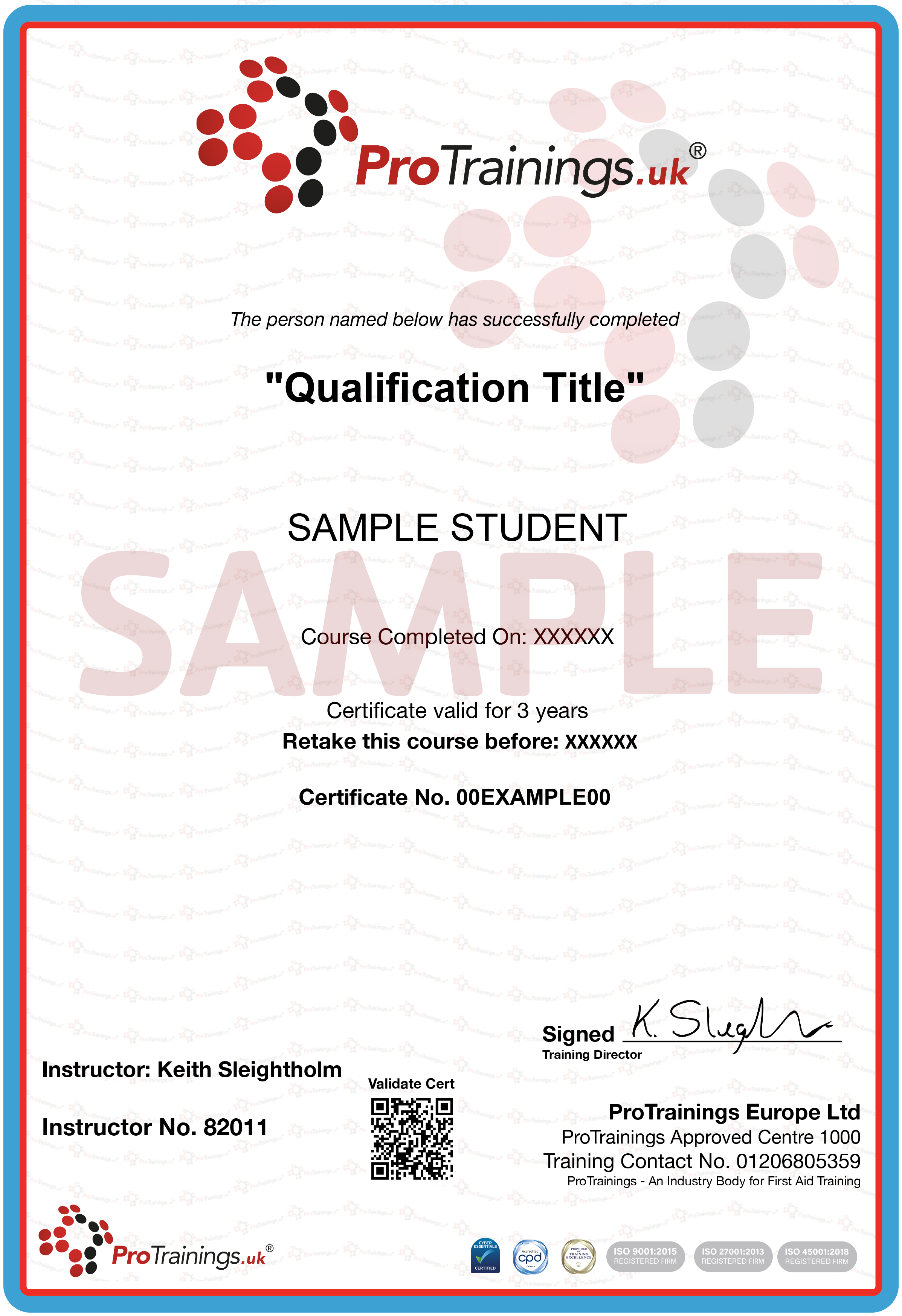
Yes, when you complete the online course you will be able to download and print a compliant completion certificate, evidenced-based learning statement to confirm course content and a certified CPD statement. There is no extra charge for the certificate. You can also buy a printed certificate to be posted to you for a small extra fee.
What training courses do you offer and how are they delivered?
We offer a full range of training courses across all business sectors as video online, blended and nationwide at your business or our local training centres. With over 350 courses you can learn at a time and place that meets your busy schedules and save money on travel and costs away from the office.
Group Trainings for your Organisation