This site is powered by the ProTrainings platform. All content is © 2025, ProTrainings Europe Ltd. All rights reserved.


Pro Trainings is rated 4.6 out of 5 based on 70450 ratings.
This site is powered by the ProTrainings platform. All content is © 2025, ProTrainings Europe Ltd. All rights reserved.
Pro Trainings is rated 4.6 out of 5 based on 70450 ratings.

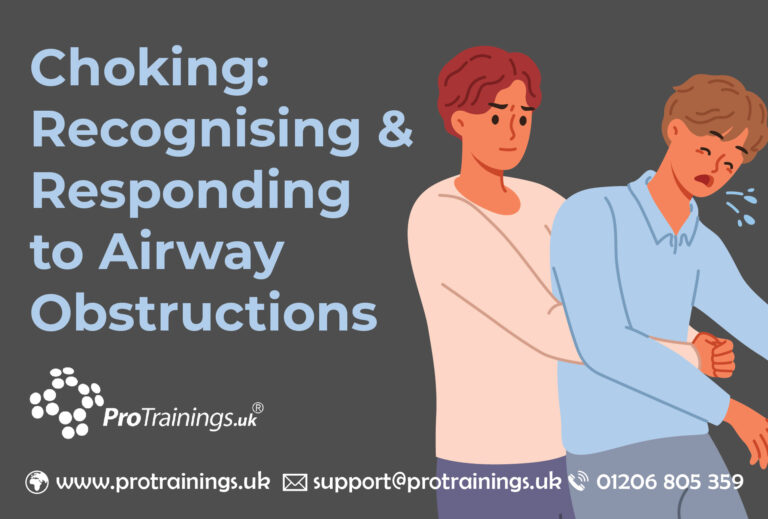
Choking occurs when the airway becomes blocked by a foreign object, preventing the person from breathing properly. Choking can happen quickly and requires immediate action to prevent serious injury or death from suffocation. Knowing how to recognise the signs of…
Fainting, or syncope, is a sudden, brief loss of consciousness caused by a temporary reduction in blood flow to the brain. Although fainting is usually not life-threatening, it can sometimes be a symptom of an underlying health condition or result…
Electrocution occurs when a person comes into contact with an electrical current, which can cause severe injuries or even death. Electrical injuries can affect the skin, muscles, heart, and other vital organs, making it crucial to act quickly and safely.…
Recognising and Responding to Water-Related Emergencies Drowning is a life-threatening emergency that occurs when a person is submerged in water and unable to breathe, leading to asphyxiation. Near drowning refers to survival after a drowning incident, but it still requires…
Eye injuries can range from minor irritations to serious trauma that could lead to permanent vision loss. Knowing how to provide first aid for different types of eye injuries is crucial for protecting the person’s eyesight and preventing further damage.…
Poisoning occurs when harmful substances are ingested, inhaled, absorbed through the skin, or injected into the body. Poisoning can happen accidentally, intentionally, or due to environmental exposure. It is a medical emergency that requires prompt action to prevent serious injury…
Hypothermia and frostbite are serious conditions that occur when the body is exposed to extreme cold. They can develop quickly and lead to life-threatening complications if not treated immediately. Knowing how to recognise the signs of hypothermia and frostbite and…
Heat exhaustion and heatstroke are serious conditions that occur when the body becomes overheated. These conditions can develop quickly, especially in hot, humid environments or during strenuous physical activity. Left untreated, heat exhaustion can progress to heatstroke, a life-threatening emergency.…

Merry Christmas from All of Us at ProTrainings! As the festive season approaches, we want to take a moment to thank each and every one of you for your support throughout the year. It’s been a wonderful journey working together,…
Seizures, also known as fits, are sudden bursts of electrical activity in the brain that disrupt normal functioning. They can vary in intensity and duration, with some seizures being mild and others life-threatening. Epilepsy is a neurological condition that makes…